

Are Your Characters Flat? Here's How to Fix That
Crafting unforgettable characters that readers remember long after the last chapter... and having fun while you're at it


Characters: the bane of every author’s existence. We can’t live with them, can’t live without them. Where’s the happy medium? When do we enjoy ourselves within all this?
It’s troublesome to be writing for your own amusement and then get stuck on a boring character that you just cannot figure out. What does it matter that she has red hair or that he likes to wear black shoes only? Why is this the only thing that your brain wants to tell you about this character?
Because yes, our characters are their own person. They do what they want to.
I’m here to show you how to sync yourself with your character so that they get fleshed out, go along with your plot, and make decisions that are realistic and exciting.
In short, how to build strong characters.
Warning: this post ended up being much longer than I anticipated. Please still read it, though. There’s lots of good stuff here!
Your Approach is Wrong
If you’re like me, when you think of a character, an image of them appears in your head and you can almost hear them talking or doing something.
Maybe you see what clothes they’re wearing or what they do to earn a living. Maybe you see them with a long, shining sword or a dusty old book. Maybe you see them crying or laughing. Maybe you hear them say something catchy that really needs to get on Pinterest somehow.
But then they stagnate. There’s nothing new about them.
You wait patiently for something interesting to pop up regarding them. You wonder why they’re standing purposeless in the corner.
Writers, it’s time to put our mom hat on and tell them to go in time-out. Characters, you better do what we say, or risk termination.
It’s time to implement a little discipline.

Begin at the Beginning
Take your least-developed character. Start where they start in the story and write down every little thing they would do or say to the main character right now. For example, one of my characters-in-development at the moment: Agnes Maggley, from my modern-day cozy fantasy murder mystery. Though I didn’t write down the actual developmental brainstorm, it looked a bit like this:
She starts by walking round the neighborhood of St. Peter’s Park. She sees a young man who turns out to be her across-the-street neighbor, Gilbert Brown. She’s somewhat acquainted with him; but she wants to know him, because she’s curious what makes him tick.
There we already have great grounds for exploring her character better. It was months ago that I first began to develop her; now I know that she’s very inquisitive, loves anything British, and is rather snarky.
This Character is Now Your Best Friend
The second-best way to explore your character is to imagine that you are best friends with them. What makes you so? Is it the way that they laugh at all your ridiculous jokes? How they always color-coordinate their clothing (why do they do this, by the way?)?1 How they stick up for the littlest person in the room?
For example:
I like Agnes because she asks very smart-aleky questions and makes me laugh at Peter and Gilbert. We have so many inside jokes that we’re always teasing the boys about, and they get rather annoyed; however, they know it’s all fun and games and we mean no harm.
Agnes knows when to be serious, though. When I’m upset, she’s a great listener. She’s extremely sympathetic and would be a great mother to small children who are always scraping up their knees on the driveway. When Gilbert wants her to shut up she always does, because she knows he focuses best in silence.
Right there is a lot of good information about what she would do in plot-related things. In my case: oh, there’s a dead body lying crumped on a chair? Oh, he has mismatched socks? Agnes would stare at the body and then say, “his crime was color-coordination. Case closed.” Then we have what other characters would do, and here’s when I tell you something important.

This is Where You’ve Got to Pants
Don’t be orderly. Don’t go about it with lists and bullet points. These are people. Go crazy.
Don’t cross anything out because it’s absurd. Go with the flow. Your character wants an ice-cream cone in the middle of a car chase? Does he want it bad enough to actually get it? Why don’t you let him, and see what happens? What will he say when the others are mad at him?
Elaborate like you’re writing a paper and don’t want to do the research. Like you’ve got fifty more words to write and you don’t want to put in a dry comment about the weather. Like your mom just told you to do your chores and you “need to finish this paragraph” but really just don’t want to clean toilets for the next half-hour.
Catch my drift?
Character Arcs
A well-written character has their arc, too. Though there are many different methods of writing and designing arcs, there are still a few common trends that I’ve put down for you here.
A true character arc is simply the journey of going from a lie to a truth. The act of defeating that lie, because it was destructive, and coming to the fresh and freeing life of truth.
Beliefs make up a person as they are, as they will always be.
Lies make up a person as they were, as they once found themselves.
Truths make up a person as they will be, as the person who defeated the lie.
1. Beliefs
Firstly, your character needs to know what they believe. Maybe it’s that they believe nothing. Maybe they believe that the world is flat and supported by turtles all the way down. (Hey, some people do.) Maybe they believe they aren’t good enough. Maybe they believe they are the only one who is capable of leading their circle.
This time, my main character Peter Smith is the guinea pig.2
Peter believes that there is more to his past than just living on the farm. He thinks that his grandparents are hiding something from him, that his parents didn’t simply die from illness. He believes that if he were to get away from his grandparents, he might find out the truth.
Everything with characters is connected. This little bit about Peter shows us that not only does he have grit and willpower, but he is actively searching for the truth rather than running away from it. That is huge, and I’ll talk about that in a minute.
2. Lies
Every character has a lie (or multiple lies) that they believe. This comes from their beliefs, but I want to separate “beliefs” from “lies” because I want to make sure everyone is aware that there is a difference.
Beliefs can be categorized as permanent, at least during the current arc.
Lies are only believed as long as the arc is still in its negative phases.
Once more, our friend Peter:
Peter believes that he will always be the last choice in everything. He’s been stuck with his unloving grandparents for so long that he not only believes that they will never want him but that no one will ever want him. He thinks that he’s just a charity case and has no place doing what he’s doing.
Kind of dismal, I know. However, the way that I found out that he believed this was by looking at his backstory (his previous life with his grandparents) and understanding what kind of moral toll this took on him.
3. Truths
A character’s truth is usually present during the entire story, and only after the midpoint of the story (which is the turnaround moment) does the character start to accept and believe this truth.
The lie is a monster under the bed. The truth is the baseball bat with which to whack the monster.
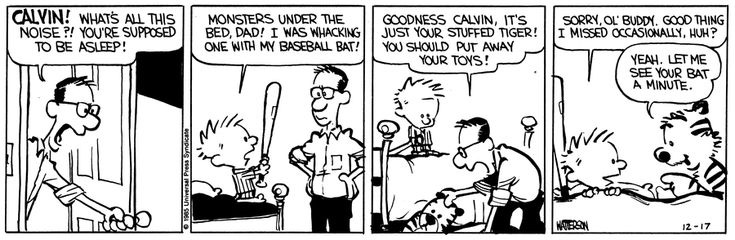
Here we have our combined (and paraphrased) arc, once more from Peter.
Peter believes that there is more to life than being unwanted. However, he also believes the lie that he has no purpose or destiny. When he is taken halfway across the globe and is forced into a chain of events regarding a murdered man in mismatched socks, he realizes that he might just be the only one capable of solving this mystery. He acts on this truth and discovers its value, therefore not only defeating the external antagonist but his internal lie.
Here’s your formula.
Believes lie
Catches glimpse of truth
Tests truth out in terms of desires
Truth is true!
If we were constructing a negative arc for a villain, the villain would tear down their old lie only to replace it with one that is far worse, because their desires do not correspond with the story’s ultimate truth.

Dialogue is Key
Talking to your characters gets you a lot of sustenance to work with. You get their:
Manner of speech
Go-to actions
Hilarious quotes
Plot and conflict ideas
And more
There is a lot of fun to be had with this, too. My favorite methods of talking to my characters include a walk or just a scribble session. I’ll either talk into my phone, recording what I say just in case, or I’ll write everything down as fast as possible (either on a computer or in a notebook, but notebooks do allow for a little bit more thinking time as you write).
You never know what sort of conversations you’ll end up having with your characters.
It’s like when you want your friend to ask you a certain question about your day because you’re excited about it, but they don’t so you have to spit it all out on them at an inconvenient time.
With this, you’re just giving your characters the catalyst they need to tell you all about it in an orderly way.
You can either have it be between you and your characters, or just be with other characters.
You could format it like a script or like a story. You can describe or you can only write down quotes. You can indicate who’s talking or not. This is just for you, so it doesn’t have to be perfect by any means.
Let Your Character Be Themselves… After You’ve Polished Them Up
I imagine writing like a sterling silver ball. It’s very tarnished and brown, and I have a cloth to wipe it down with. Every time I wipe hard enough to reveal some bit of silver, that’s a piece of story or character I’ve uncovered.
No story is going to be perfectly polished, so you have to focus on what you want to wipe down in order to be the happiest with your story.
I hope that this has helped your characters become revealed to you. I’ve pooled everything I use into this post, so even though I don’t have long lists of questions or a big chart of what they add to the story, I still end up with fleshed-out characters.
Make sure to do it your way, though. If you only like one of these ideas, only do the one. If you wish I would have included more resources, shoot me a DM and we’ll talk turkey. I’ve got mountains of books that I’ve read that have great characters to look at.
Go forth and make thee some characters!
Question: which of your characters has proved the toughest to develop, and which the easiest?
This looks awfully funny, but I can’t imagine a better way to form this sentence. It really is important that you ask questions at every turn.
I started writing this exercise with Agnes but realized that I have not gotten that deep with her yet. Seems like I’ve got some work to do.
Typically, though there are some exceptions, the easiest characters are those i've known for a while; the toughest are those i haven't been with. Fortunately, it tends to go that i am with characters for a fair long time to very long time before i actually do the story, and the help of that is i have not yet had characters that were tough to develop, but then i have, a bit less fortunately, had characters that have been very tough to convey to the reader.