

The Substack girls just discovered EML and here's why they love it so much
(Besides the fact that the Reprobates exist.)

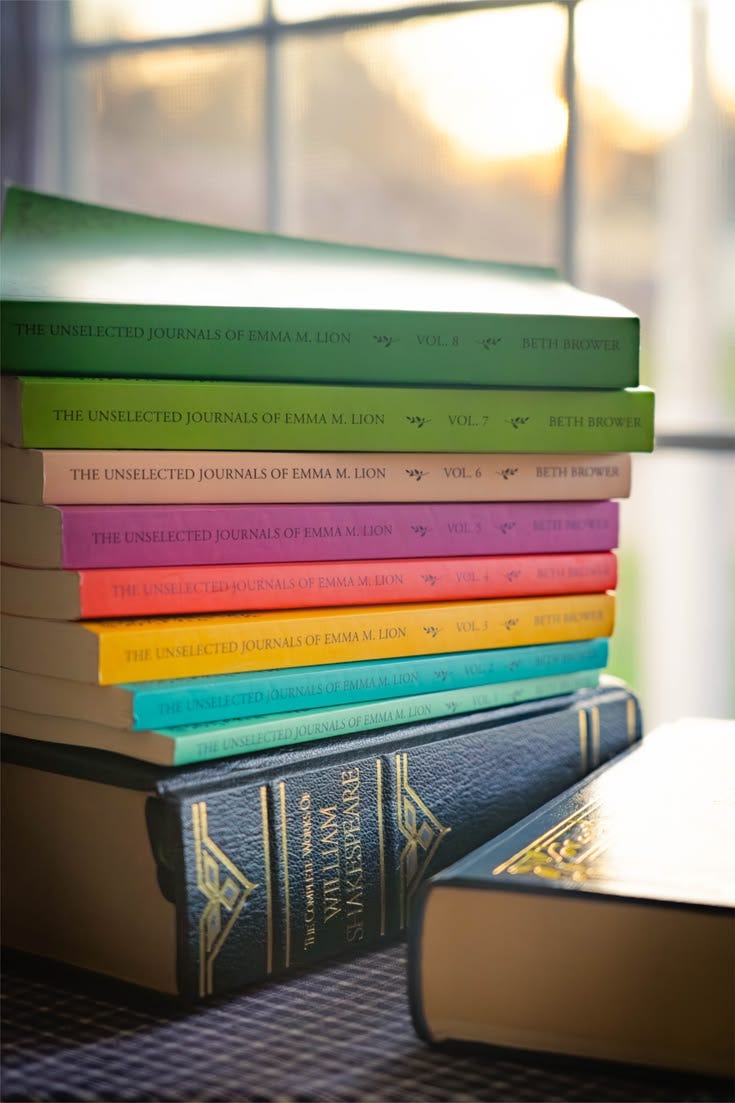
Almost a year ago I did a book review of the first volume of The Unselected Journals of Emma M. Lion, Volume 1. I purposely only read the first so that I couldn’t accidentally leak spoilers into it. After I published the post, I started on Volume 2.
I had no idea what I was getting myself into.
I finished reading them for the first time back in August of 2025, and I’ve read them at least three or four times since then. I hate staying up late and it takes a really good book to keep me up past 10pm, but I stayed up until 3am reading so that I could finished volumes 6, 7, and 8 in the same 24-hour period. It’s obvious that these books are something special, something new, and something worth obsessing over.
But why?
Spoiler warning: if you haven’t read volumes 1-8, read at your own risk!
Redemption
Beth Brower has said it herself in interviews: her characters have strong redemption arcs. She’s a Christian, and as the series has a Christian worldview as well, we can safely assume that this is meant to echo the journey that each Christian takes: born in dust, sinful, and unrepentant; then risen through grace and faith into glorious salvation.
Just to make things easier, I’m going to focus mainly on the Alchemy for this section.
The characters in the Alchemy all have their backstories. They all have dirt that they’re trying to hide. But they rise, or at least we think they’re going to rise sometime soon.
Pierce’s past gets revealed in vol. 8, even after he previously told Emma that he may never wish to talk about it. Emma understands this, knowing that people change and that her own past haunts her just as much (though perhaps she changes her mind after meeting Pierce’s stepfather). But his past is dark and he is dangerous at times. It’s obvious that he’s going to require the most redemption out of the four, but I have high hopes for a happy ending.
Islington has always been a brotherly figure to Emma, and she likes to pry at his personal information (like her, we understand the temptation to read others’ journals). Vol. 8 is heavy with big reveals, and it doesn’t leave Islington out: his twin sister, Hannah, passed away almost ten years ago, and he still cannot bear to speak of her. Mariana, his sister, tries to tell him that Emma can’t be a replacement. But we know that she isn’t, and he doesn’t intend for her to be (even if he isn’t so good at explaining that). In befriending Emma, he is rising above his past and recovering from the heartbreak of losing his best friend.
Hawkes is a mysterious character to begin with. We know very little of him, but what we do know enchants us. Readers have asked if he is magic. I want to know if he is magic. Because there is something so beautifully haunting about him that we can’t help but want to know more. The books he gives Emma, his connection with Declan Lion and Ireland, his careers at Eton and Cambridge, his position as both a reprobate and a vicar. He is two sides of the same coin. We know his kind and reclusive side, but we are unsure about the other side: what does his backstory hold? Does his arc require less work than the others… or does it require more?
Emma is easier for us to read because she is the narrator. We know her past with Maxwell, we know her financial difficulties, we know how she was orphaned taken advantage of. We know she’s on track to a solid redemption, if she isn’t already there. For Emma, we have strong hope, and that’s what redemption is built on. We keep reading because we want to see her in a better place than she is in now.
Symbolism
Every time you read EML, it gets better and better. The pages are thick with meaning. You can read these books once and simply see the past and present… but if you take a closer look, you can see the future.
Symbolism can be found in colors, animals, fairy tales, other books, and many, many other cues (usually from the Medieval tradition for literature).
The Rabbit Hole Soul Sisters have a wonderful publication committed to unlocking the symbolism of these books; make sure to check it out.
It’s evident to me that each character has a color and a Shakespeare character. Some of them may even have an animal, but this idea is still foggy. There are multiple instances where these claims are affirmed.
I don’t want to steal the RHSS’s thunder, so go check out their series on color.
Shakespeare
However, I did want to talk about Shakespeare. (Warning: this section got a lot longer than I thought it would.)
Emma was steeped in it as a child. She’s read all the plays at least three times and her father read them more than that and probably quoted them and talked about them with Emma all the time. Additionally, St. Crispian’s hosts Julius Caesar every year. We know from the beginning that Shakespeare holds special importance.
I haven’t figured out very many characters so far, but that’s what makes rereading so enjoyable.
First, let’s start with Emma and Hawkes.
In Volume 2, Emma says that exchanging notes with Pierce through the wall feels “very Pyramus and Thisbe” (May 2nd). Those characters are from A Midsummer Night’s Dream. We continue to see references to this play as we move on in the series. In Volume 3, Emma says she “felt almost like Titania in the enchanted woods” (July 15th). This gives me reason to believe that she in fact is meant to represent Titania. (I share many opinions with the RHSS and believe that Pierce is not Emma’s endgame, thus her transition from Thisbe to Titania). In Volume 6, January 5th, during the Twelfth Night Ball with Oberon and Titania, we know that though Lady Eloise Silver is the Titania of the night, she is not the right one. According to The Boy, “Titania is going to have to be strong enough to break the curse. This one doesn’t have it. I think even Oberon must see this… when Titania comes, maybe our Oberon will take his fighting chance” (January 5th). Remember our dear Hawkes and the Mayday fight? Added to the fact that Hawkes is only spotted once at the ball and Striker none, I am of the opinion that Hawkes was Oberon and Stiker was pretending to be Hawkes in order to help conceal his identity. (Thanks again RHSS for guiding me along the way.)
This leads me to the conclusion that Emma=Titania and Hawkes=Oberon.
In the play, Oberon wishes for Titania the entire time, whilst Titania first “falls in love” with Nick Bottom the weaver (who even plays Pyramus in the play within the play). I believe that the same will occur in the series.
Thus Pierce=Pyramus.
Now, there are multiple plays that I have discovered in this series, which leads me to the second character I want to look at: Arabella.
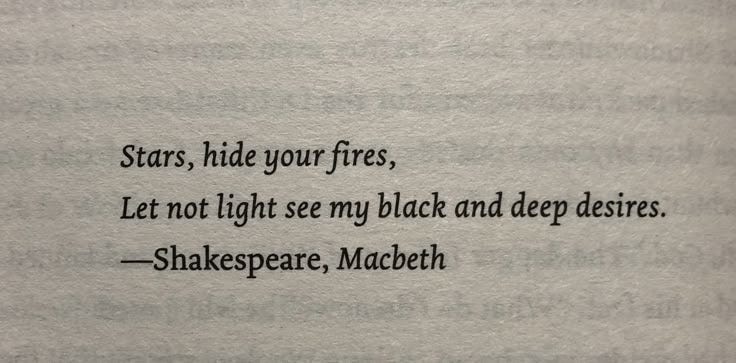
Arabella is smart. Cunning. She always gets what she wants (or so we think). The first time we meet her, she quotes Shakespeare: “Emma, screw your courage to the sticking place” (Vol. 1, March 9th). This from Macbeth, and it is Lady Macbeth’s line.
So, Arabella=Lady Macbeth.
Though there isn’t much evidence as to this claim, I think that it opens a lot of doors and shows us thousands of possibilities. I’m concerned for Arabella and want her to fall in love with someone worthy of her (because, on second or third consideration, she isn’t so snobbish as she appeared to me at first). I’m worried that she’s going to marry a dunce, though, and take some very Lady-Macbeth-esque actions.
Now we come to Islington.
There are two cases of twins in Shakespeare: A Comedy of Errors and Twelfth Night. The first is about two sets of twins, all males. The second is about a set of twins, Viola and Sebastian, who were separated in a shipwreck.
I’m going to take a hint from the book’s circumstances and confidently say that Twelfth Night is going to be Islington’s inspiration.
Islington=Sebastian and Hannah=Viola.
Only, Brower has turned the play a bit so that we know that Hannah/Viola is not going to return, and Islington/Sebastian is going to have to go on without her. That leads me to ask, who is going to be his Lady Olivia? Does Emma also serve as a second Viola?
I’m also excited to see if Emma is more than one or two characters, especially if she is going to be Portia or Calpurnia in Volume 9. Will that hold symbolic meaning? We’ll have to see!
Colors
Since the RHSS has so kindly provided a color guide in their posts, I will link it here.
Colors mean so much and can tell many secrets about a person before the text reveals them. It takes the story to the next level. Learn how to understand color cues, and the world of well-written books will be your oyster.
Fairy Tales
I’ve been able to find a few fairy tales in the series as well. The first and most obvious is Cinderella… with a twist. Emma returns to her home only to find that her parents have been replaced by someone who isn’t even related to her by blood and two “stepsiblings” who she has never met. Of course, the twisting that is done is wonderful— we all love Agnes and most of us probably like Parian at least a little (I personally find him wonderful). And, to our delight, she goes to many, many balls. But which will be the special one (or three? the original tale held that many).
The second fairy tale is quite different and asks more questions than it gives answers. I was perusing my volume of Grimm’s fairy tales and found a tale called “Darling Roland.”
We all know and love Roland, and this tale doesn’t quite make sense of anything, so take from this summary what you will.
There were once two girls, and they were cousins. They lived with a witch, who was their mother and aunt. The witch hated her niece terribly and planned one night to cut off her head. However, the niece played a trick on her aunt and switched places with her cousin in the night, so that the witch killed her own daughter instead. The niece stole the witch’s hundred-league boots and magic wand and ran away with her sweetheart, Roland. Using the boots and the magic wand, they managed to kill the witch when she ran after them in the morning. The niece turned herself into a flower, and Roland into a fiddler. When they killed the witch, Roland forgot all about his flower and ran away to marry another girl, until the niece presented herself as a bridesmaid at his wedding and he remembered her. They married and lived happily ever after.
Quite a strange tale, h’m? I don’t know what to make of it. I only have this quote to follow it up:
“Going against Aunt Eugenia always feels like toying with a witching hour” (Volume 1, March 9th).
The final tale (and this one doesn’t count so much) is Alice’s Adventures in Wonderland. St. Crispian’s, with its upside-down signs, young vicar, strange laws, and abiding, unquestioning denizens makes it feel awfully magical, just like Wonderland.
Animals
There are very few times we see animal symbolism in these books, but the few instances are certainly worth pointing out.
Firstly, this note from Volume 1: “walk the streets… before full dark to see the lamps in their glory. My favorite is a fox with a bird in his mouth, the bird being a light, only fitted with wings” (March 7th).
Hopefully we’re all thinking the same thing: Hawkes the Fox.
It’s strange that the lamps aren’t mentioned again in the series (please enlighten me if they are).
However, this makes me wonder: who is the bird that the fox is catching, if Hawkes is indeed the fox? Is it Emma? The pear-scented lady?
Or is it himself?
We know that he is a two-sided coin. He is a reprobate and a vicar. But is a two-sided creature as well? Is he a fox to the reprobates (as they call him such) and a bird to the parish? And one day will the fox catch up with the bird and carry him away?
All this from a lamp. Which possibly could not mean anything. Still, this is the power of symbolism.

There are two other animals mentioned: a rabbit and a hound. The portraits of these animals can be located in Islington’s Rabbit Room, and I have not been able to discern which people, if any, the rabbit and the hound represent. Or is Islington both, like what we could say about Hawkes? Is he a hound on the outside (he does love dogs) and a rabbit on the inside? Is there part of him fleeing and another part chasing?
Another possible note of interest is The Hound, Chambers’ glove shop. Does The Pirate have any connection to Islington? Is that why he’s becoming kinder? Or is it simply because Pierce has asked him to be nice?
It might be blasphemous for me to say this, but even so come, Volume 9, come.
In short: the pages are thicker than the paper.
Everyone loves EML so much because the more you read it, the more you understand the depth of the true story beneath all of the madness and mishaps. Emma may be hilarious, Hawkes mysterious, Pierce thunderous, Islington aloof, but there is more to that than we could ever imagine.
That is why we love EML— and other such wonderful works— so much.
Do you have an idea, but you don’t know how to express it? Do you have characters, but nothing to do with them? Are you looking for a quick and easy guide to putting a novel together fast… so that you can actually enjoy brainstorming?
It sounds like you would love my Novel Outlining Bootcamp, now only $5.99.
It includes:
An explanation of the 8-point plot structure model
The best way to keep your plot moving: scenes that direct your readers and characters from point A to point B
How to give your characters meaning through arcs
And a few tips on how to avoid burnout!
What a great article! I especially love the Shakespeare links! I would only throw in one more possibility. Arabella is linked to Cleopatra as well in vol. 3 (from Shakespeare’s Antony and Cleopatra). Islington is also linked to Mark Antony in vol. 3 too. This could be something or nothing. I like your theories too. Also the Fox and the bird lamp is mentioned twice. The second time is when Emma and Jack are walking traitors road after their escape from the gambling tables. -L
Well, yes, obviously, we love EML because of the Reprobates (and all the other rather wonderful men). 😅 Lovely article, Lydia! I join you in wishing for Vol. 9. 💕